countries
180+Each country organised participation locally. The central product supported one shared day without becoming a global register.


World Cleanup Day / Global volunteer movement / 2018-2021
World Cleanup Day asks people in more than 180 countries to show up on one date. I designed and developed the 2018 campaign and live event website, built the hosting around the annual traffic spike, and created an invitation generator that helped volunteers recruit their own friends with a photo, their own words, and the channels used in their region.
countries
180+Each country organised participation locally. The central product supported one shared day without becoming a global register.
invite seasons
2018→2021The same generator carried a new date and new artwork every year.
The recruitment problem
A one-day global cleanup cannot be run from one office. Local leaders choose the sites, set the times, speak the language, and know who will actually turn up with a pair of gloves. The central website had to support that work without becoming its bottleneck.
World Cleanup Day had no global registration system. Each participating country ran its own registration. I designed the central campaign and live event website around that decentralised reality, then built a tool volunteers could use to recruit people directly.
The volunteer path
The campaign and live event website explained the global day while local teams kept control of registration, sites, times, and practical details.
The generator combined a photo, a personal sentence, and the year's World Cleanup Day artwork into one shareable image.
The invitation could move through WhatsApp, Messenger, Viber, LINE, VK, SMS, or email, with download and copy-link fallbacks for the channels no API reaches.
15 September 2018
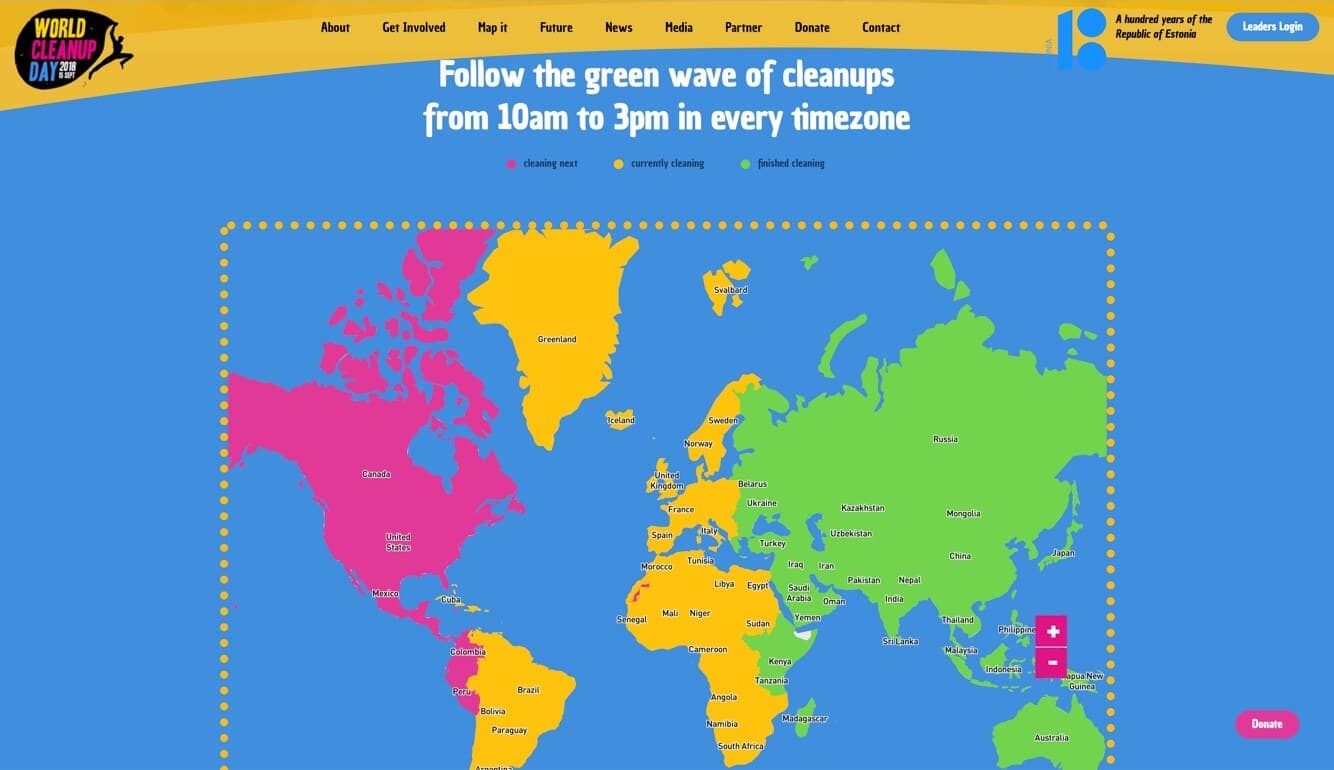
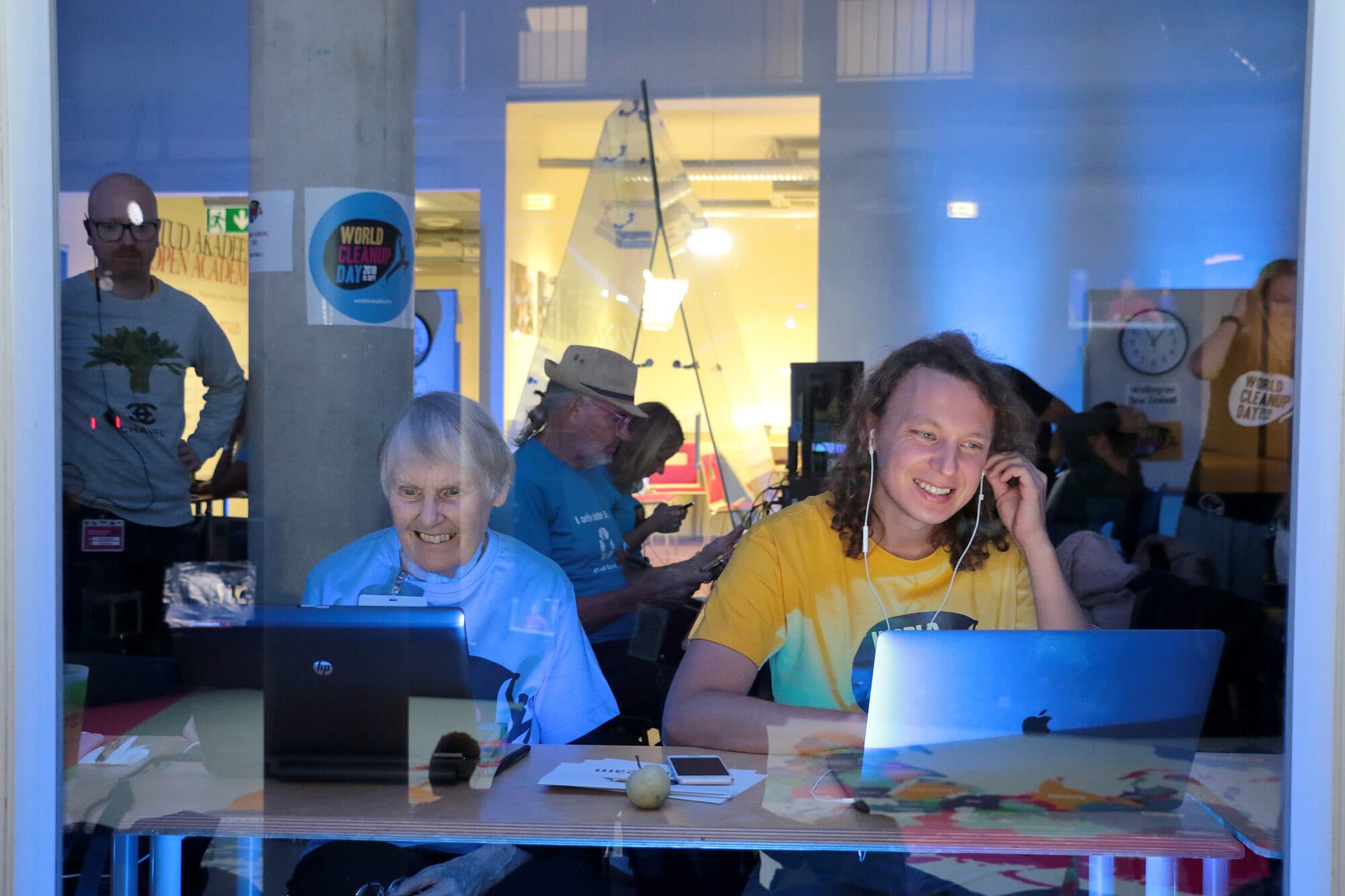
The invite generator did its work in the weeks before the cleanup. On the day itself the site switched into live mode: a UTC clock, whichever country's broadcast was on air, a wall of posts arriving from the movement's own channels, and a map of the wave crossing the planet. Volunteers who had already finished their own cleanup could watch the rest of the world take its turn.
After the day
Everything about the digital product was seasonal. Attention built towards one date, then the system went quiet until the next cleanup was announced. The yearly rollover of date, artwork, and copy had to be cheap enough that nobody dreaded it.
The invitation machine could return with a new visual identity and date instead of being rebuilt each year. The campaign site and the interactive generator were separated, so editorial changes and traffic on the tool did not have to become one operational risk.
HAAM’s role
I designed and developed the 2018 campaign and live event website, built the invitation generator, and handled the hosting, deployment, and seasonal rollover through 2021. Registration stayed with participating countries. I did not build a global registration product. World Cleanup Day visual identity by Let's Do It World.
Next case study
How we learned
Research connected country teams, languages, timezones, seasonal traffic, volunteer invitations, sharing behaviour, and the small central newsroom. The key insight was organisational: participation scales when local people can recruit and act without waiting for the centre to manually coordinate every step.
Evidence trail
Good interaction design should be traceable upstream. Depending on the project, that upstream work might be interviews, co-design, fieldwork, archive work, testing, analytics, or operations. Here is the shortest version of the chain from evidence to decision.
01
180+ countries, 55 onboarding languages, 16 share destinations, annual traffic spikes, timezones, volunteer invitations, and a small live newsroom defined the environment.
02
A central team cannot manually coordinate every country or channel, so recruitment and live state need to distribute outward.
03
Minimise registration, localise onboarding, let volunteers generate invitations, support regional sharing, and derive live states from schedules and timezones.
04
Central infrastructure becomes decentralized participation, letting local volunteers recruit while the live site follows the cleanup wave automatically.
Optional analytics. Google Analytics and Clarity load only if allowed; form, email, and chat content are excluded.