chronological foundation
1917→Objects connect individual stories to the years of Finnish independence.


Life in Finland / Cultural storytelling / 2017-2018
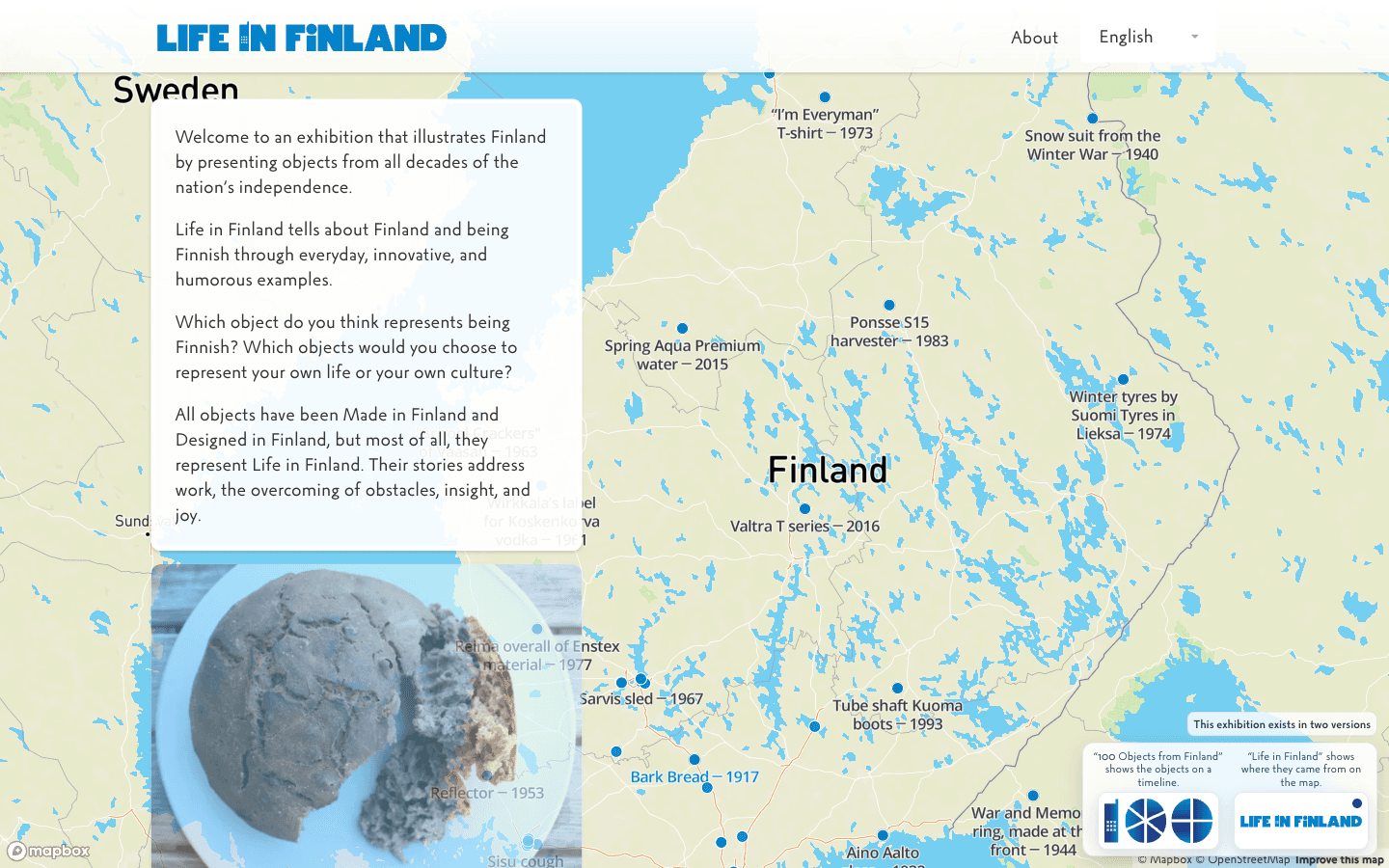
Life in Finland explains a country through the things people made, used, saved, laughed at, and recognised. I shaped the collection so visitors could enter through an ordinary object and leave with a larger story about work, invention, obstacles, and joy.
chronological foundation
1917→Objects connect individual stories to the years of Finnish independence.
chosen scale
EverydayRecognition gives visitors a way into history without a lecture.
languages
ManyOne structured collection travels without splitting into separate products.
digital afterlife
Still liveThe collection kept its public value after the exhibition cycle.
The cultural problem
National exhibitions often begin with importance and end with distance. Life in Finland reversed that. Bark bread, a lock, banknotes, cough drops, and domestic objects make history concrete because people can picture a hand using them.
The interface needed to protect that intimacy while still supporting chronology, search, comparison, languages, image credits, institutional ownership, and the complete collection. The product had to feel like discovery, not database administration wearing a nicer coat.
The reading model
A strong image and plain name create a low-friction invitation.
Chronology turns a charming item into evidence of a changing society.
Search, browsing, and language changes let visitors build their own version of the story.
After the exhibition
Life in Finland continued the material beyond a single venue and audience. The online product gave the stories a longer life, a multilingual reach, and a way to be encountered without knowing the exhibition existed.
Years later, the sensible work was not to declare the old stack sacred. It was to preserve the collection, repair what time had broken, and keep the material accessible. Maintenance is not glamorous. Neither is losing cultural memory because nobody budgeted for an update.
HAAM’s role
HAAM’s role covered the digital product concept, interaction model, interface design, multilingual content structure, responsive implementation, testing, and later stewardship.
Next case study
How we learned
Research connected objects with years, ownership, stories, images, credits, and translations. Looking across the collection showed that recognition and curiosity could become a more human entry point into national history than a top-down institutional narrative.
Evidence trail
Good interaction design should be traceable upstream. Depending on the project, that upstream work might be interviews, co-design, fieldwork, archive work, testing, analytics, or operations. Here is the shortest version of the chain from evidence to decision.
01
A multilingual collection connected everyday objects to years, images, ownership, stories, credits, search, and a continuing digital archive.
02
Recognition is an easier entry into national history than an abstract thesis, but discovery still needs chronology and reliable metadata.
03
Lead with the object and use stable identifiers so search, browsing, chronology, and language switching share one model.
04
The exhibition material gains a longer multilingual life after the physical exhibition cycle ends.
Optional analytics. Google Analytics and Clarity load only if allowed; form, email, and chat content are excluded.